Running to Work in Belfast: The 5.2-Mile Commute That Stuck
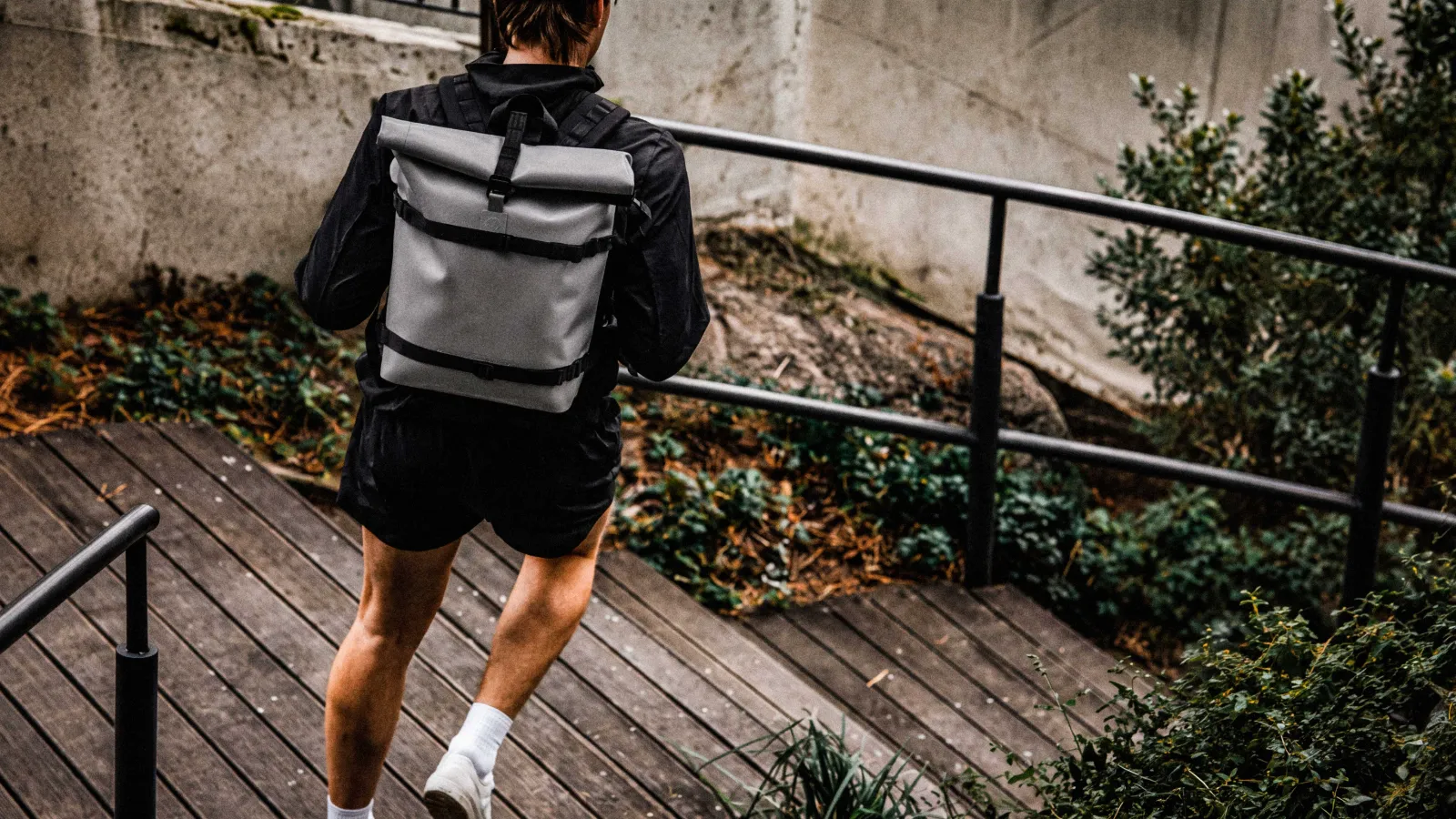
A laptop, lunch and hair gel in a 5–10 kg bag. Why I run 5.2 miles to work in Belfast three days a week, and why I wouldn’t go back.
Deodorant. Laptop. Lunch. Hair gel. Running to work sounds simple until you try to fit an ordinary working day into a backpack. Mine can weigh anywhere from 5 to 10 kg. Yet I’ve kept doing it three days a week since 15 July, and I wouldn’t go back to driving those days.
The car takes about 30 minutes. My run to work takes about 43. For 13 extra minutes, I get 5.2 miles (8.4 km) done before I’ve even opened the laptop. The harder part, it turns out, is sorting the bag.
- 30 min By car
- 43 min Running to work
- +13 min The difference
Running to Work Through Belfast
I go past Shaw’s Bridge, over the River Lagan, past the beautiful Queen’s University Belfast and through Botanic Gardens. There are worse ways to get into Belfast in the morning.
- Shaw’s Bridge
- River Lagan
- Queen’s
- Botanic Gardens
The air is fresh-ish — this is still a city — but I’m outside, moving, and by the time I get to work I’m properly awake.
- Blood pumping.
- Buzzing, even.
- Properly awake.
A half-hour sitting still in the car never gave me that.
It’s 5.2 miles (8.4 km) home as well. The run in has 51 metres of ascent; the run home has 91 metres. I can feel those extra 40 metres after a day at work.
- Ascent — run to work: 51 m
- Ascent — run home: 91 m
But when I get through the door, my evening run is already done. No sitting down and trying to talk myself into going back out.
What I Carry on a Run Commute
Deodorant, a change of clothes, laptop, food, aftershave, hair gel.
- Deodorant
- Change of clothes
- Laptop
- Food
- Aftershave
- Hair gel
By the time it’s all in there, I’m carrying somewhere between 5 and 10 kg. Some days it feels like I’ve packed for work and a weekend away.
I won’t pretend the organising is fun. It started to become a chore, and there have been mornings when the bag has been the hardest part of the whole idea.
Running five miles is one thing. Running five miles with your working day on your back is another.
That faff hasn’t put me off. Once I’m moving, I remember why I bothered.
How Running to Work Adds Up the Miles
One run to work and one run home gives me 10.4 miles (16.7 km). Do that on Monday, Wednesday and Friday and it’s 31.2 miles (50.2 km) in a full week. The journeys were there anyway. I’m just using them differently.
5.2 miles there. 5.2 miles home.
- 5.2 mi 8.4 km · To work
- 5.2 mi 8.4 km · Home
- 10.4 mi 16.7 km · Per return
- 31.2 mi 50.2 km · Full week
I haven’t missed a run since starting. Through Friday 2 October, those commutes alone have given me 35 return journeys, 70 separate runs and 364 miles (585.8 km). After I’ve done both runs on Monday 5 October, it’ll be 36 return journeys, 72 runs and 374.4 miles (602.5 km).
- End of July — 8 commutes: 83.2 mi / 133.9 km
- End of August — 21 commutes: 218.4 mi / 351.5 km
- End of September — 34 commutes: 353.6 mi / 569.1 km
- Fri 2 Oct — completed (35): 364 mi / 585.8 km
- Mon 5 Oct — planned (36): 374.4 mi / 602.5 km
I had to check that calculation twice. It doesn’t feel as if I’ve found an extra 374 miles lying around, but apparently I have.
That’s the bit I value most. I don’t have to wait until I feel motivated or find a spare evening.
On those three days, I need to get to work. So I run.
The miles add up because the routine keeps happening.
How the Numbers Stack Up
Belfast · Started 15 July 2026 · Mon / Wed / Fri
- Car to work: 30 min
- Run to work: 43 min
- 8.4 km · To work: 5.2 mi
- 8.4 km · Home: 5.2 mi
- 16.7 km · Return: 10.4 mi
- 50.2 km · Full week: 31.2 mi
- Ascent to work: 51 m
- Ascent home: 91 m
- Bag weight: 5–10 kg
- : 374.4 mi (602.5 km)
16 July 154.4p/L. 1 October 191.6p/L. +37.2p/L.
Stop-start city traffic at ~35 mpg: ~£1.29 each way · ~£2.59 return · ~£7.76 full week
Six months of run commuting ~£202. 26 weeks · 78 return commutes · illustrative
Shaw’s Bridge / River Lagan / Queen’s / Botanic Gardens
Fuel illustration assumes a 5.2-mile car route in stop-start city traffic at ~35 mpg (imperial) and 191.6p/L — not a measured saving. Diesel price: Consumer Council NI. Urban mpg: Right Fuel Card (UK). Monday’s milestone counts once both runs are done.
The commute used to take me to work. Now it takes me further.
Does Running to Work Save Diesel Money?
There’s money saved by leaving the car at home, although I can’t honestly give you an exact figure without measuring the driving route and checking the car’s mpg. And this isn’t motorway cruising — it’s a city commute, with traffic lights, queues and plenty of sitting still with the engine running.
The Consumer Council’s average diesel price in Belfast was 191.6p a litre on 1 October. It was 154.4p on 16 July, just after I started — a rise of 37.2p a litre.
- Belfast avg diesel — 16 July: 154.4p/L
- Belfast avg diesel — 1 October: 191.6p/L
Example diesel saving
Assumes a 5.2-mile drive each way in stop-start city traffic at ~35 mpg (imperial) and 191.6p/L.
- ~£1.29 To work
- ~£1.29 Home
- ~£2.59 Per return
- ~£7.76 Three commute days
- ~£202 Six months · 78 commutes
Stop-start traffic is where a diesel is at its thirstiest — around 35 mpg for a typical diesel car in urban traffic, against 60 on a motorway. Keep that going for six months — 26 weeks, 78 return commutes — and it comes to roughly £202 of diesel left in the tank. It’s an illustration, not my exact saving, but it’s another reason I’m happy to run.
Data references
- Consumer Council NI — fuel price archive, 1 October 2026
- Consumer Council NI — fuel price archive, 16 July 2026
- Right Fuel Card (UK) — What is MPG? Urban stop-start vs motorway diesel economy
Why I’m Sticking With It
The extra miles matter. So does arriving at work buzzing instead of feeling stagnant from the car. So does getting home with the run finished and the evening still ahead of me. I’ve got a route I enjoy, even if I could do without hauling the laptop along it.
Running used to be something I had to make time for. Now, three days a week, it’s simply how I get to work. It’s tangled up with my routine, and probably with who I am at this point. A bit much to say about a commute? Maybe. But I’d miss it if I stopped.
Have you tried running to work? More importantly, how much have you managed to cram into your bag?