Mizen to Malin: Behind the Story — Part 3
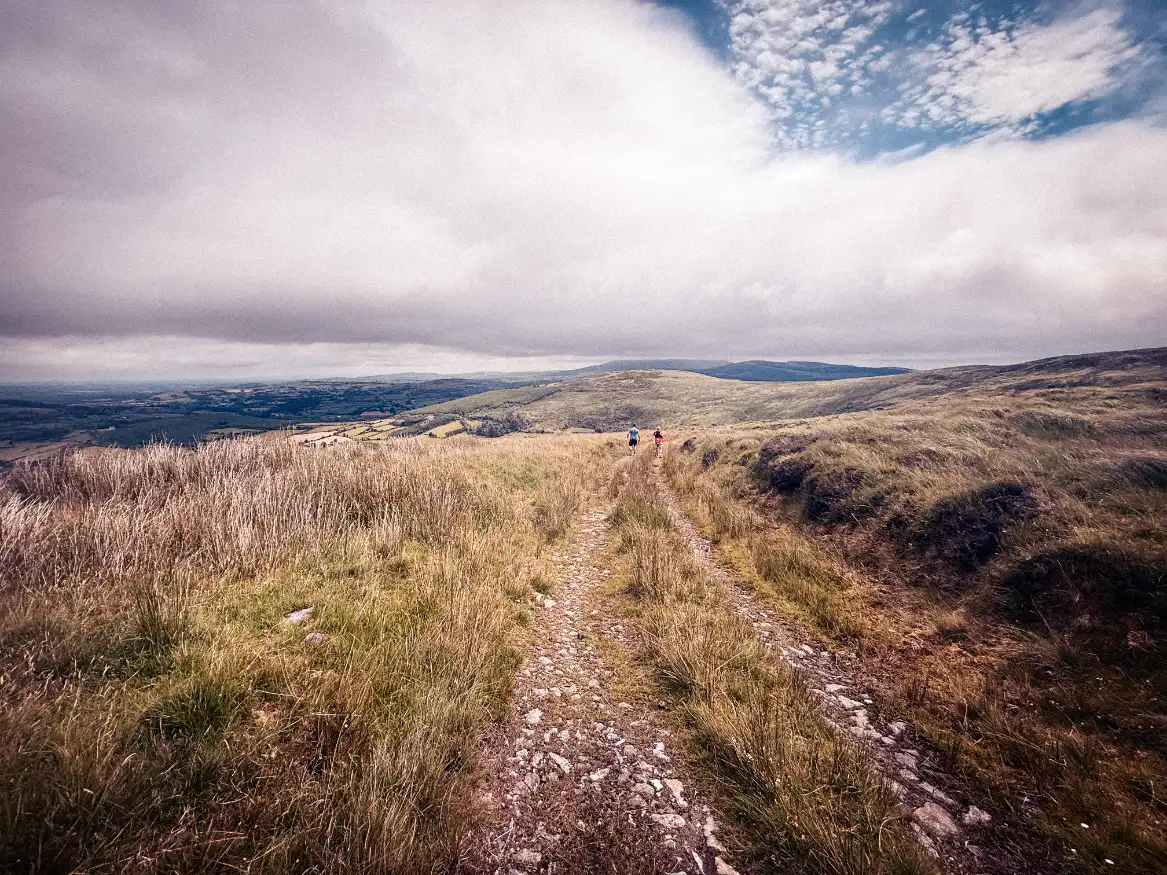
The Adventure Becomes Life. By the second day, running the length of Ireland no longer felt like a sporting challenge — it felt like trying to live a normal life at full speed.
01 Running Becomes the Easy Part
Before we left Mizen Head, I thought the hardest part of the journey would be running.
Three hundred and fifty miles sounded intimidating enough.
What I hadn’t appreciated was everything that came with those miles.
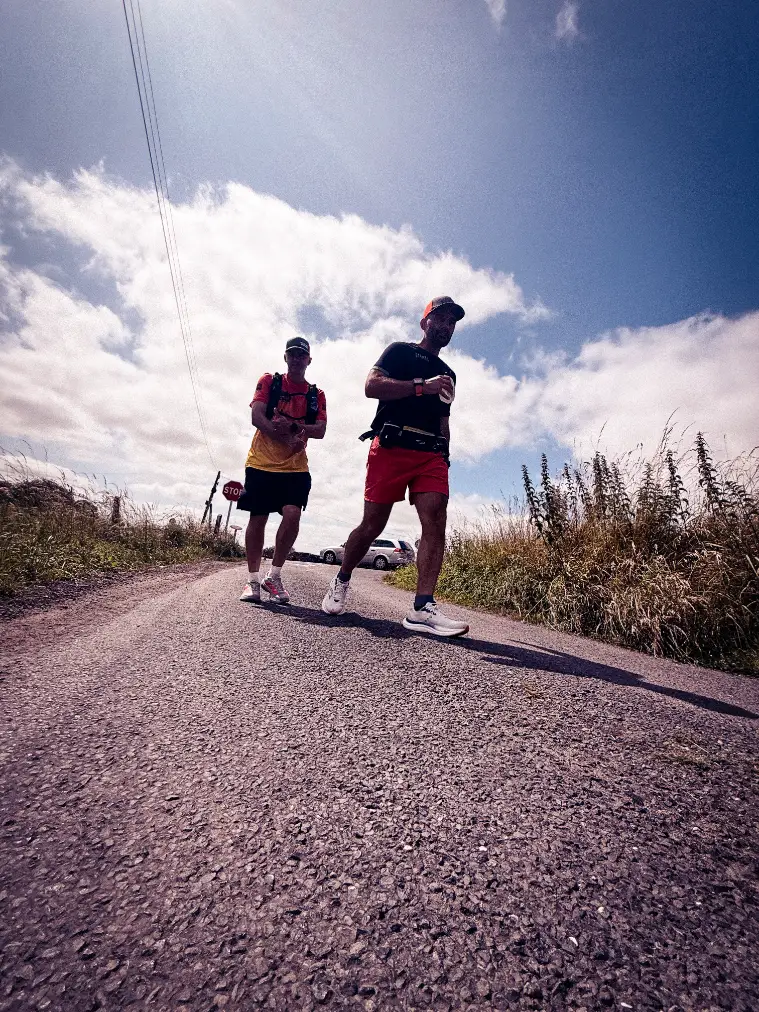
After the first couple of days, the running almost slipped into the background. It was still physically demanding, of course, but it became the most predictable part of the day. Put one foot in front of the other and, eventually, the miles would take care of themselves.
Everything else became the challenge.
You wake up already thinking about the clock. Breakfast isn’t simply breakfast anymore; it’s another decision. Do you sit down and eat properly, knowing it costs valuable time? Or do you grab coffee and pastries, eat on the move and buy yourself another half-hour of recovery that evening?
Every stop carries a price.
Five extra minutes filling bottles.
Ten minutes chatting to well-wishers.
Individually they don’t seem like much.
By the end of the day, they’ve quietly stolen an hour.
And an hour on a multi-day challenge isn’t just an hour.
It’s less recovery.
Less sleep.
More fatigue waiting for you when the alarm goes off the following morning.
The miles weren’t what controlled our days.
Time did.
Very quickly, the challenge stopped revolving around running and started revolving around everything that allowed us to keep running. Finding enough calories. Looking after sore legs before they became injured ones. Keeping the Guinness World Record paperwork dry, organised and complete. Charging watches, phones, lights and power banks every night. Solving little problems before they had the chance to become big ones.
That became our life.
- Run.
- Recover.
- Eat.
- Document.
- Charge everything.
- Sleep.
Then wake up and do it all again.
Somewhere between Gougane Barra and Banagher, we stopped feeling like three runners taking on an adventure.
We became three people learning how to live on the road.
Looking back now, I don’t think the success of Mizen to Malin was decided by the miles we ran.
It was decided by how quickly we learned to live between them.
02 Day Two — Learning to Live on the Road
The biggest lesson from Day One wasn’t about running. It was concern for Matt.
That thought was still with me when I woke. The previous evening he’d looked completely drained, and I genuinely didn’t know what version of him we’d get next.
I needn’t have worried.
He was already up, fully dressed in running kit, bag packed, sitting there as if nothing unusual had happened. No talk about how he felt, no mention of the travel from Ohio, no reference to the twenty-one miles through Cork.
Just ready.
That quiet resilience confirmed something immediately: stopping early the night before hadn’t been weakness. It had been the right call.
With that reassurance in place, attention shifted to the start of the day itself.
Breakfast almost tested that judgement.
Katie and Neil had gone far beyond what we could have expected. A full spread was waiting, along with packed lunches prepared before we’d even set off. It was generous, thoughtful, and exactly the kind of hospitality that makes you want to linger.
And we did.
Too long.
What should have been a quick refuel turned into a slow morning overlooking Gougane Barra. Conversation flowed, food kept coming, and for a brief moment it didn’t feel like a record attempt at all.
But time was already tightening its grip.
Every extra minute at that table was a minute we weren’t moving north. We were only two days in, but the lesson was already clear: comfort had to be controlled.
Eventually, we forced ourselves up and left.
As we pulled away, the stillness of the lake gave way to the road, and the Mizen Head excitement faded into something more immediate. No cameras, no countdowns, no ceremony.
Just the work.
Long roads. Crew stops. Food. Water. More road.
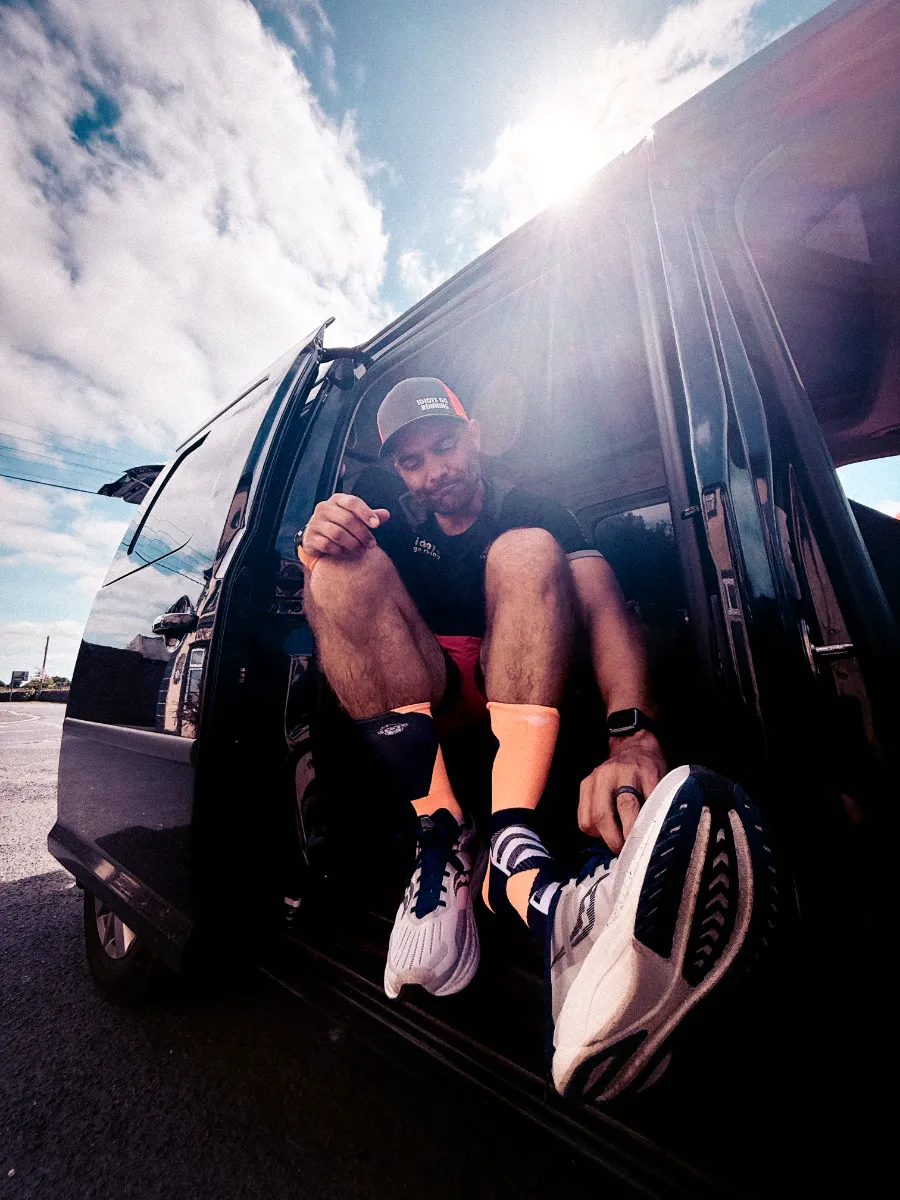
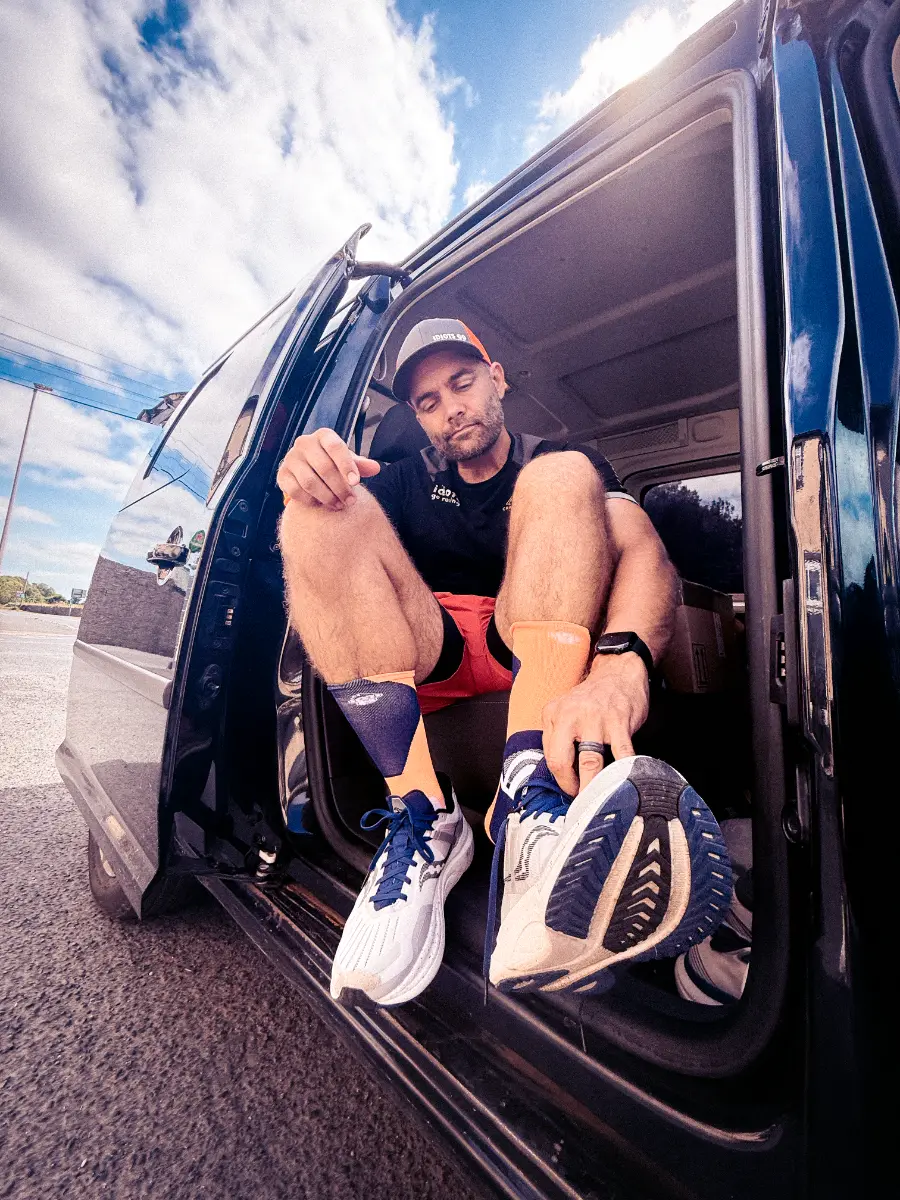
That rhythm quickly became the structure of the day, and with it came a second realisation: we had to learn how to function while moving. Proper meals disappeared. Breakfast was finished in the van, lunch eaten while changing shoes, recovery squeezed into gaps between stops.
Running the length of Ireland wasn’t just about covering distance. It was about learning how to operate while doing it.
On top of that sat the Guinness World Record process. Watches had to keep recording, photos taken, timings logged, evidence protected. Nothing could be missed or assumed.
We weren’t just running it. We had to prove it.
- Watches
- Photographs
- Log Book
- Evidence
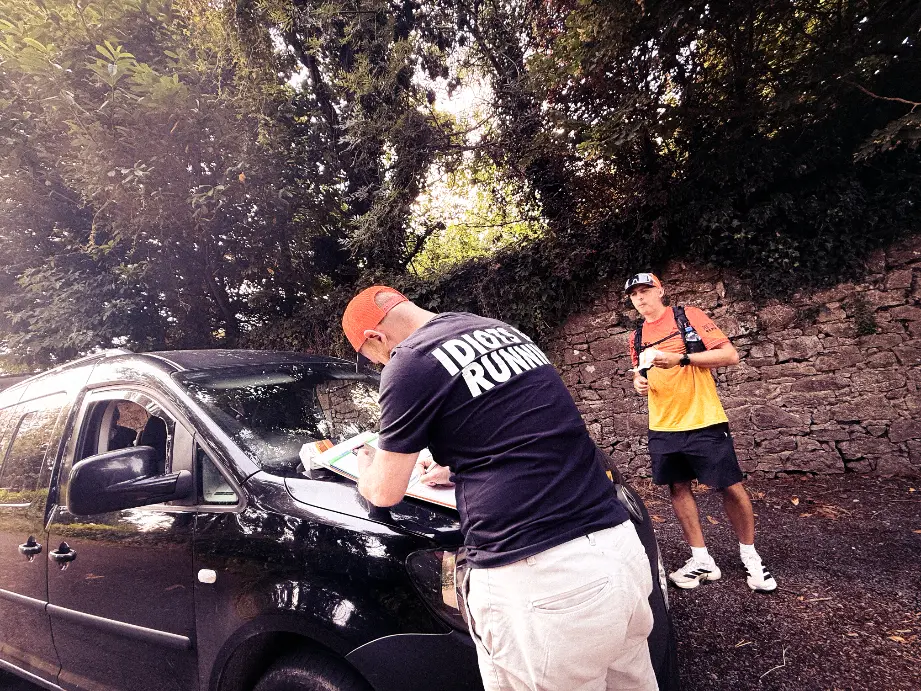
That administrative pressure ran alongside the physical effort all day, until mid-afternoon when we reached our first proper crew handover.
Dermot’s job was done. From meeting Andrew and me at a train station car park before we’d even left Northern Ireland, to collecting Matt in Dublin and guiding us through the opening days, he had kept everything moving without complication.
Now it was James’ turn.
The changeover was seamless. Dermot out, James in, and the rhythm of the day barely paused. Within minutes, the van was moving again.
The Transit doors closed. James was in the driver’s seat. We were running again.
And almost immediately, the system settled. Within a few miles, it already felt like he’d been there from the start.
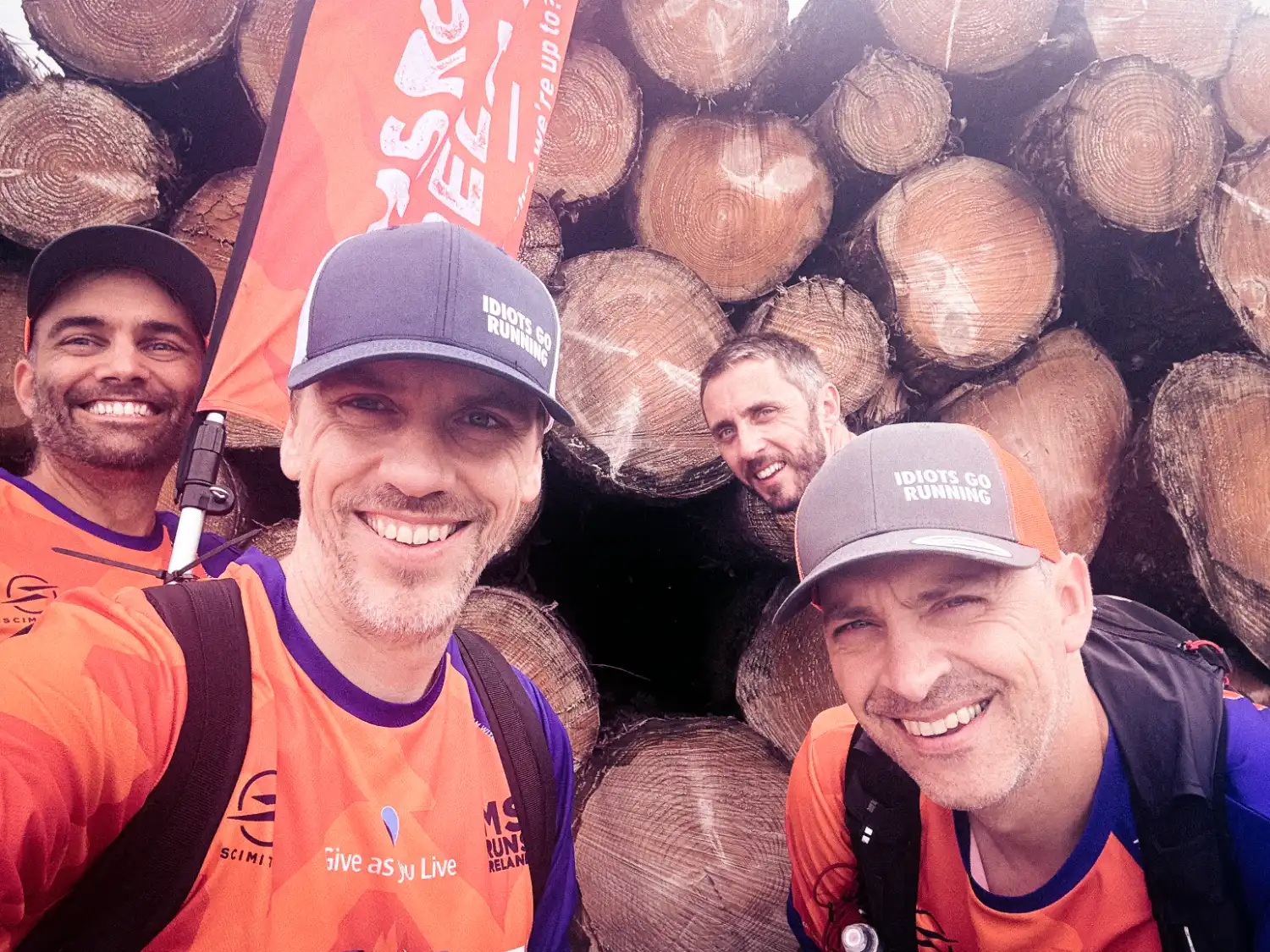
That evening, we reached Knockdrish having covered 31.1 miles.
The plan had been 30, so the extra mile was small on paper but significant in reality. After the setback of Day One, it marked a turning point: we were no longer drifting further behind and had begun closing the gap without forcing the pace or jeopardising the days ahead.
But the real progress wasn’t only on the road.
It was in how quickly we were adapting.
We were starting to understand that this wasn’t one long run. It was eleven separate days, each with its own demands, stitched together by hundreds of small decisions. When to stop. When to eat. What to carry. What to protect. When to push and when to leave something for tomorrow.
Day One had been about starting.
Day Two was about learning how to live on the road.
And Knockdrish wasn’t just a line on the map or a number on the watch. It was where the day changed character entirely.
Because it was there that we met Noreen, Radio Man Sean and stepped into a series of moments that couldn’t be reduced to mileage or timing.
That part of the journey deserves its own telling—and we’ll go into it on the podcast, along with the other moments I didn’t even realise I was missing while they were happening.
03 Day Three — Small Changes, Big Gains
Day Three wasn’t about running further.
It was about running smarter.
We covered 34 miles that day — a mile over the plan, and another small deposit in the bank.
I’d realised that breakfasts needed to work around the running instead of the other way round.
Whenever possible, I’d ask accommodation to have breakfast ready before we came downstairs. If that wasn’t possible, we’d stop for coffee and pastries on the road.
Sometimes we even managed both.
It became one of the first genuine multi-day running hacks we’d discovered.
The goal wasn’t eating less.
It was spending more time moving north.
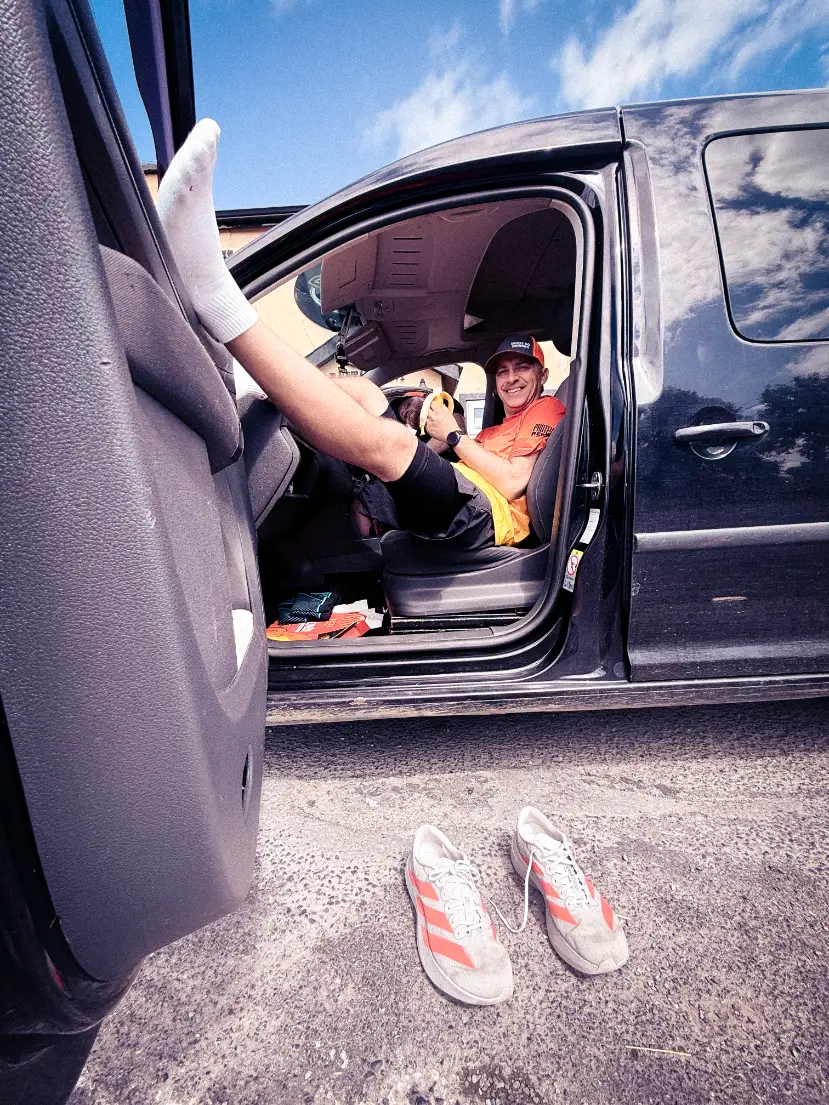
04 The Mizen to Malin Menu
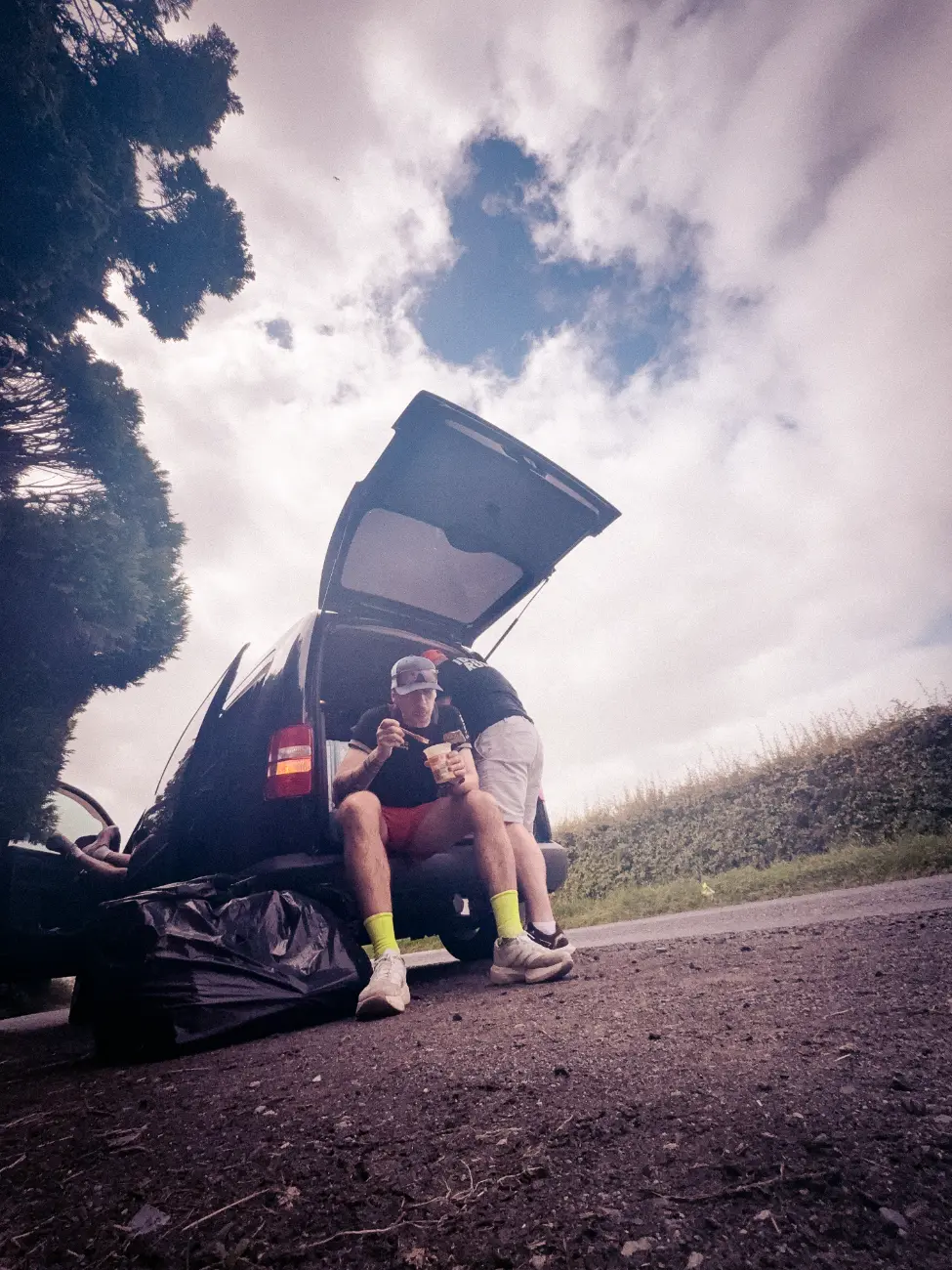
Our nutrition slowly settled into something that would probably horrify a sports dietitian.
- Coffee
- Pastries
- Pot Noodles
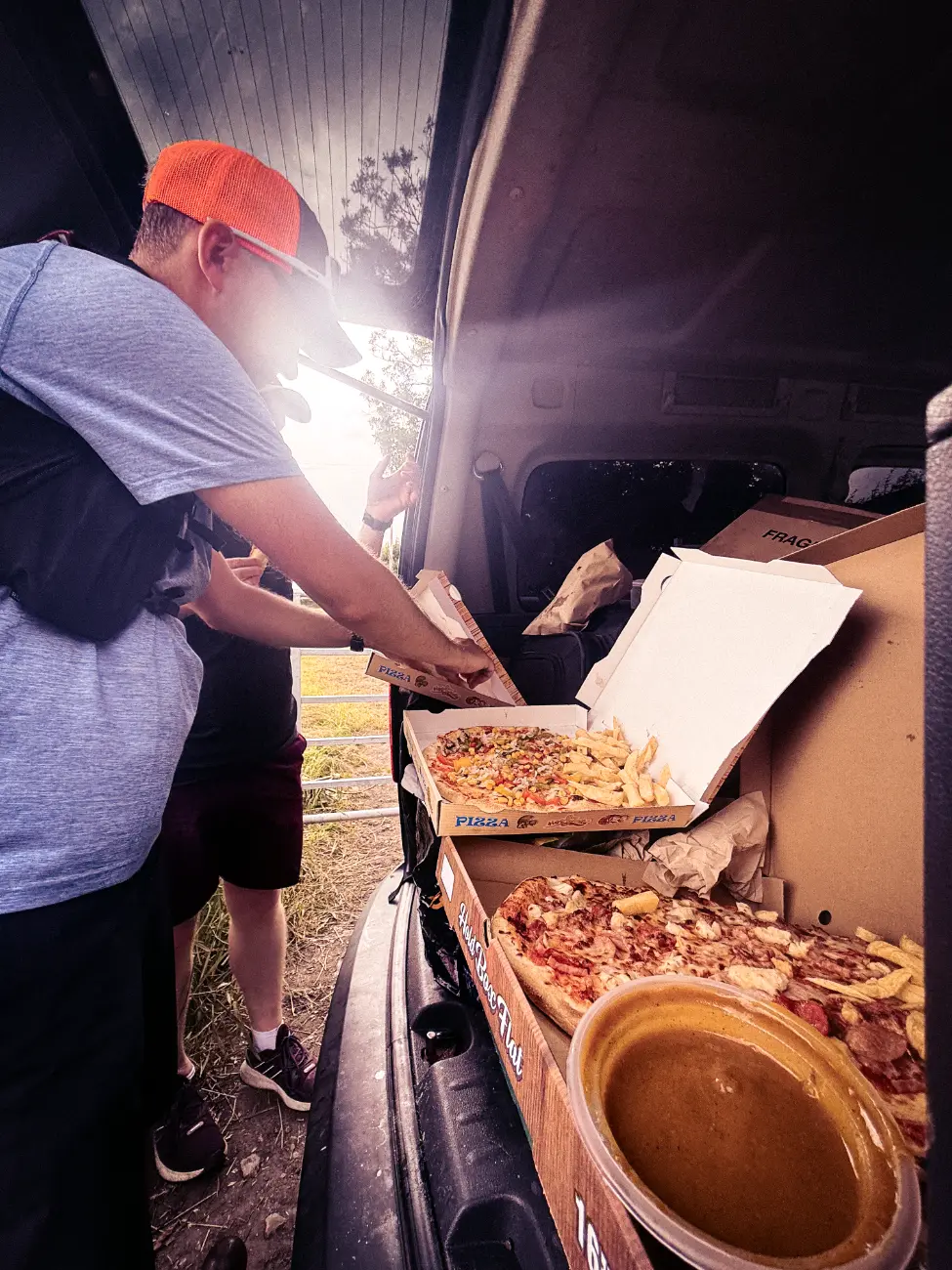
- Pizza
- Repeat
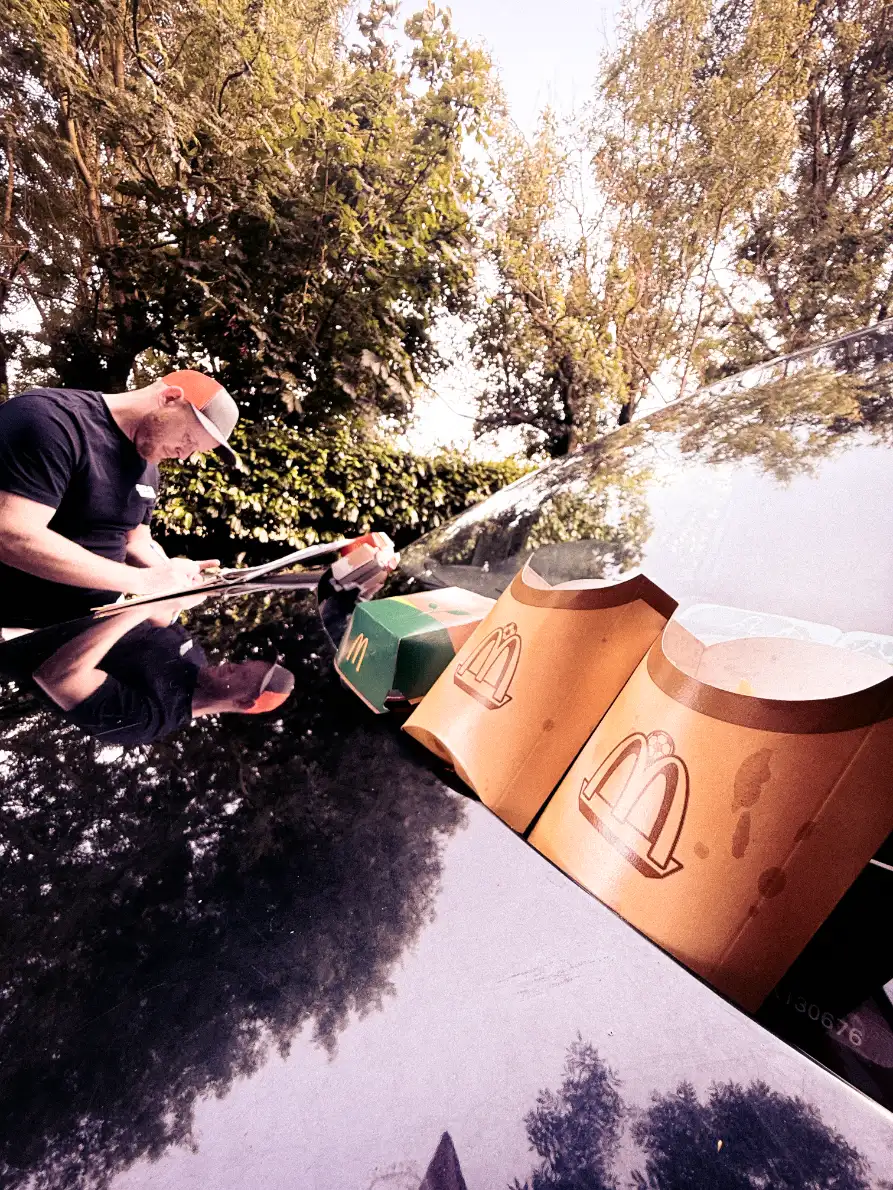
Pizza or McDonald’s beside the Transit van. It wasn’t glamorous, but it worked.
Dinner gradually moved onto the road instead of waiting until we reached the accommodation. That meant when we finally stopped running, recovery could begin immediately.
- Shower.
- Stretch.
- Plan tomorrow.
- Sleep.
It turned out that saving thirty or forty minutes every evening was worth far more than sitting down for a proper meal.
05 When the Garmin Quit
Just as everything else was beginning to settle, my Garmin decided it had had enough.
No matter what I tried, it refused to cooperate.
For a while, I wondered whether months of planning had just disappeared with one broken watch.
Then I remembered the backup.
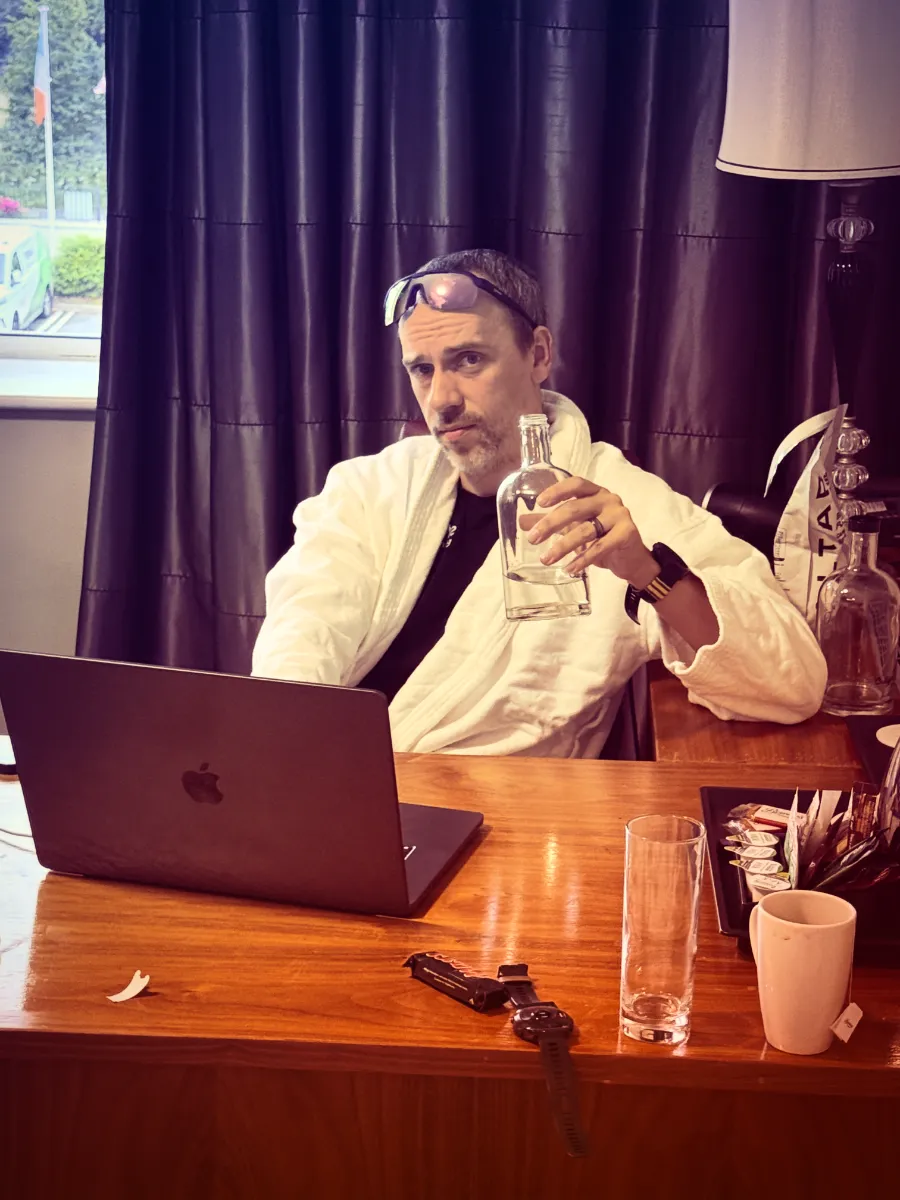
During the planning stage, I’d saved every day’s route inside the Footpath app.
From that evening onwards, every night ended the same way. After showering, I’d sit with my phone and prepare the next day’s route, checking every junction and every turn before going to bed.
It wasn’t the original plan.
But it became the right one.
06 Day Four — The Silent Supper
By the time we reached Glenstal Abbey, having covered 35.3 miles — 2.3 over the plan, our biggest overshoot yet — the noise of the day had begun to fade.
Only hours earlier we’d been grinding out miles on open country roads. Now we were in a Benedictine monastery, about to eat dinner in complete silence.
The contrast couldn’t have been greater.
Dinner itself became an experience we wouldn’t forget. There was no vegan option, so I went with the vegetarian meal. Not ideal — there was a bit of Brie in it — but after another thirty-plus-mile day, it still tasted great. Anyone who likes cheese would probably have thought it was excellent.
Matt settled in straight away. His sister is a Benedictine Sister in the United States, so a silent supper wasn’t new to him. While the rest of us adjusted, he simply sat down and ate.
Then there was Andrew.
He realised almost immediately he’d made a serious mistake. He wanted hot water.
The problem was simple: nobody was speaking.
Instead of trying to signal for it, Andrew froze. No gesture, no note, no request. He just accepted that hot water was no longer part of his evening.
His approach to the food was even stranger. He took a slice of wheaten bread, spread jam on it carefully, and cut it into eight perfect pieces.
Then he didn’t eat any of them.
To this day, none of us knows why. The eight little jam-covered squares just sat there like a tiny art installation dedicated to social discomfort.
Meanwhile, James looked like he’d been doing silent suppers all his life. He ate happily, enjoyed every bite, and went back for seconds.
That was James. He could drop into almost any situation without hesitation. Whether crewing an ultra, climbing into an ice bath, or sitting in silence with monks, he just got on with it.
Eight Jam Squares
Cut perfectly. Eaten never.
The Hot Water
Andrew couldn’t speak to ask for some.
Seconds, Please
James, entirely at home with the monks.
Looking around the table summed us up perfectly. Matt was completely at ease. James was already on another helping. Andrew had accepted defeat on the hot water and sat beside his untouched jam bread.
And I was doing my best not to laugh in a room where silence was the rule.
Strangely, beneath the comedy, the supper was genuinely peaceful. No phones. No route talk. No podcast uploads. No questions about distance left. Nothing needed solving.
We just sat and ate.
After four days of traffic, conversation, and constant movement, the silence let everything settle. It also revealed something subtle about us as a group: each of us defaulted to our own way of coping, and somehow it worked without explanation.
It became one of the calmest — and quietly funniest — evenings of the entire journey.
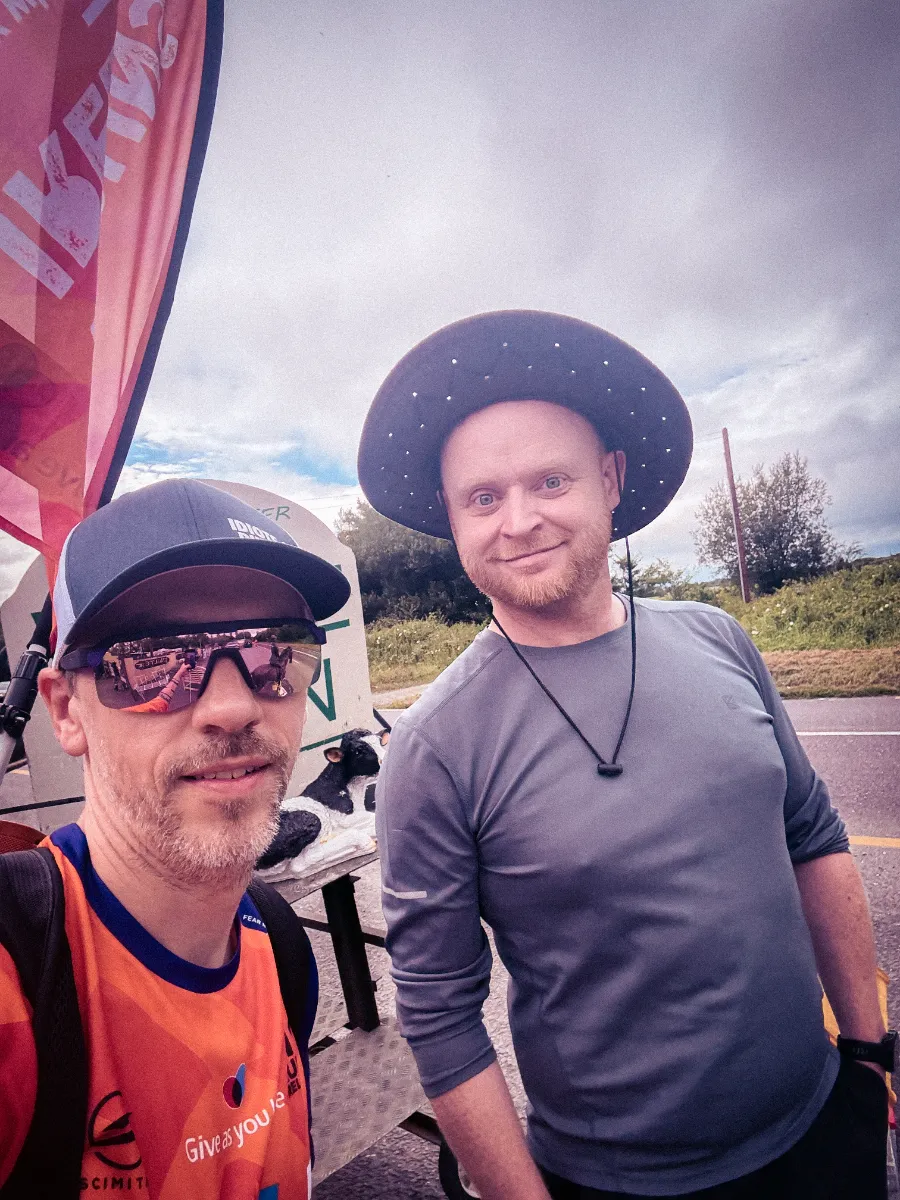
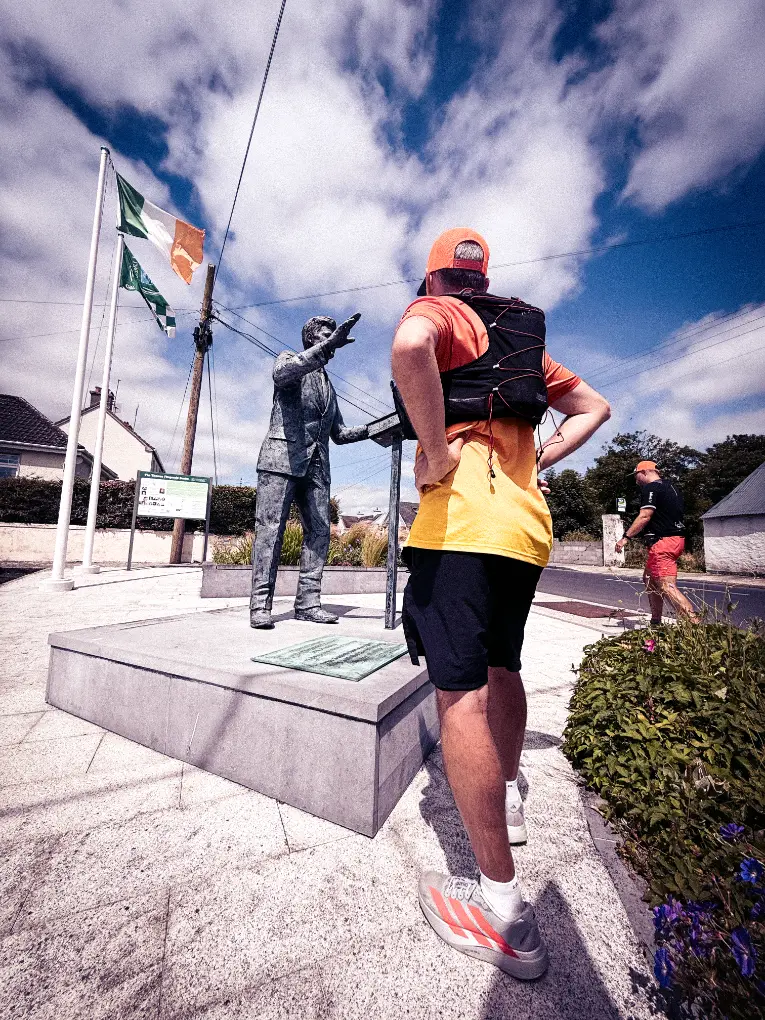
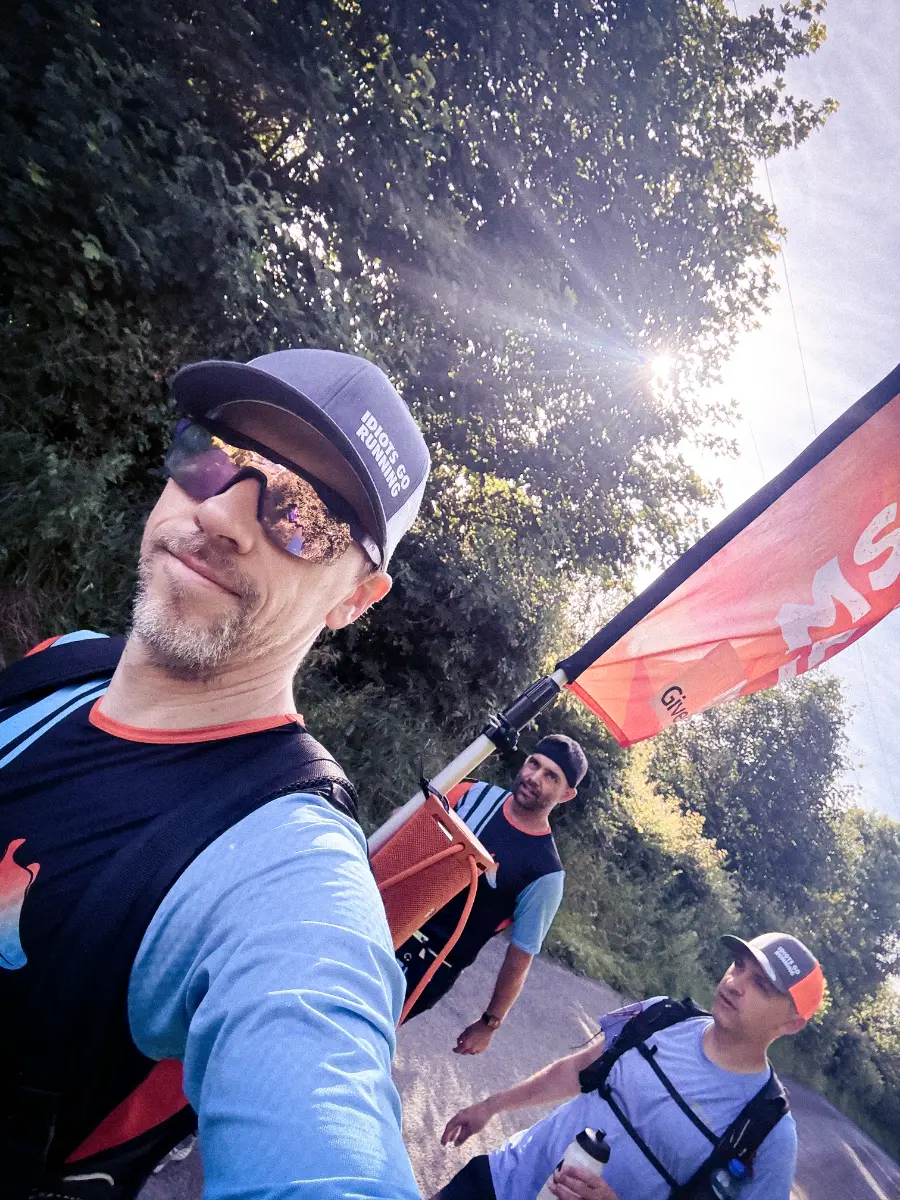
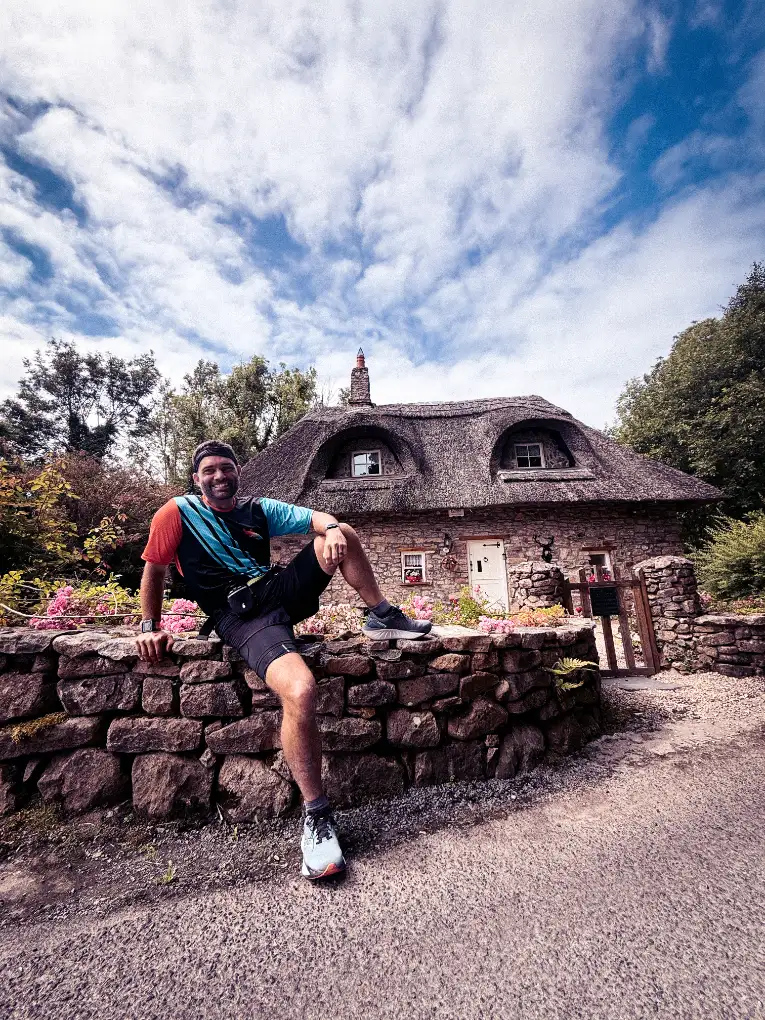
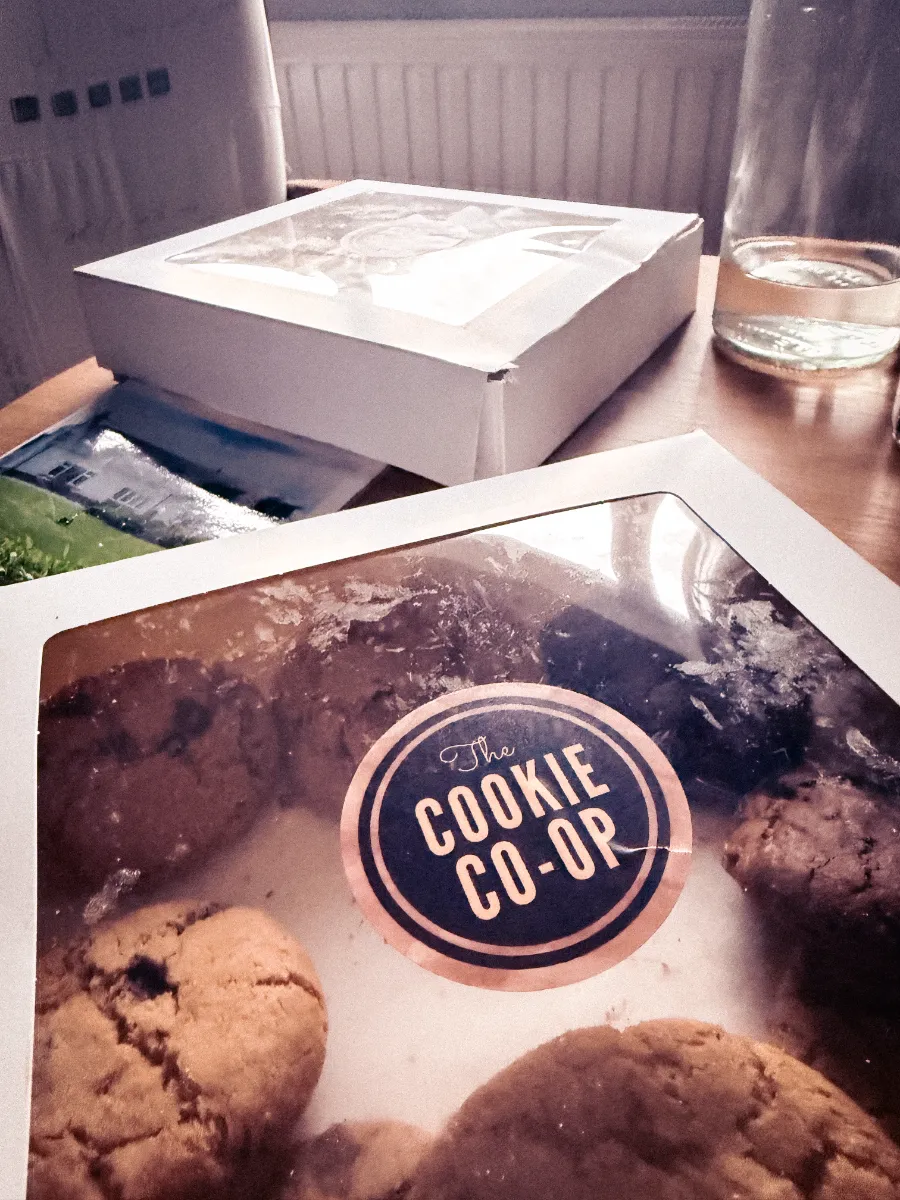
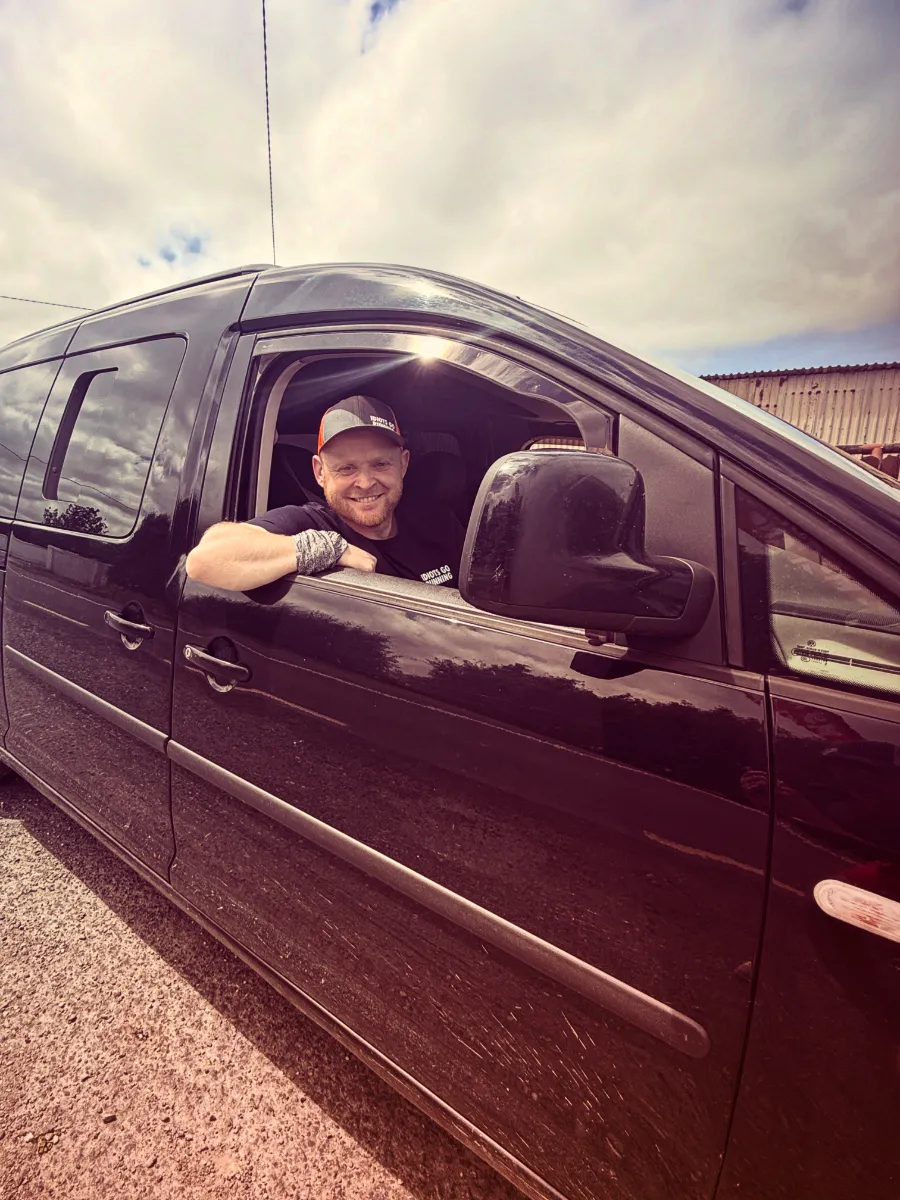
Days Two to Five, Between the Miles
07 Day Five — The Best Recovery
Day Five brought another 34.5 miles, a mile and a half more than planned. That made it three days in a row of quietly banking extra distance.
Then Austin from Banner Recovery arrived.
He had driven for around two hours, free of charge, to help four men he barely knew recover in a place he had never been before. He had given up his own time, paid for the fuel and brought everything with him.
So naturally, the first thing I said was:
“I hate ice baths.”
In hindsight, it probably wasn’t the warmest welcome for a man who had travelled halfway across the country specifically to put me into one.
So, Austin, I would like to formally apologise.
It wasn’t that the ice bath was bad. I had simply convinced myself that I was far too manly to need one. At least, that was the version I was telling myself.
Austin had travelled from Spanish Point, arriving early enough to spend around two hours setting everything up before we reached him. There was an ice bath, a jacuzzi and enough recovery equipment to make us briefly look like professional athletes.
Then he showed us the freezing water.
Matt went in first. He had experience with ice baths and stayed in for the full three minutes.
Andrew followed. It was his first time, but he climbed in without making a fuss and somehow looked far too comfortable.
Then it was my turn. I got in mainly to prove that I didn’t need to be there.
The cold hit immediately.
Matt: three minutes. Andrew: three minutes. Me: seventeen seconds.
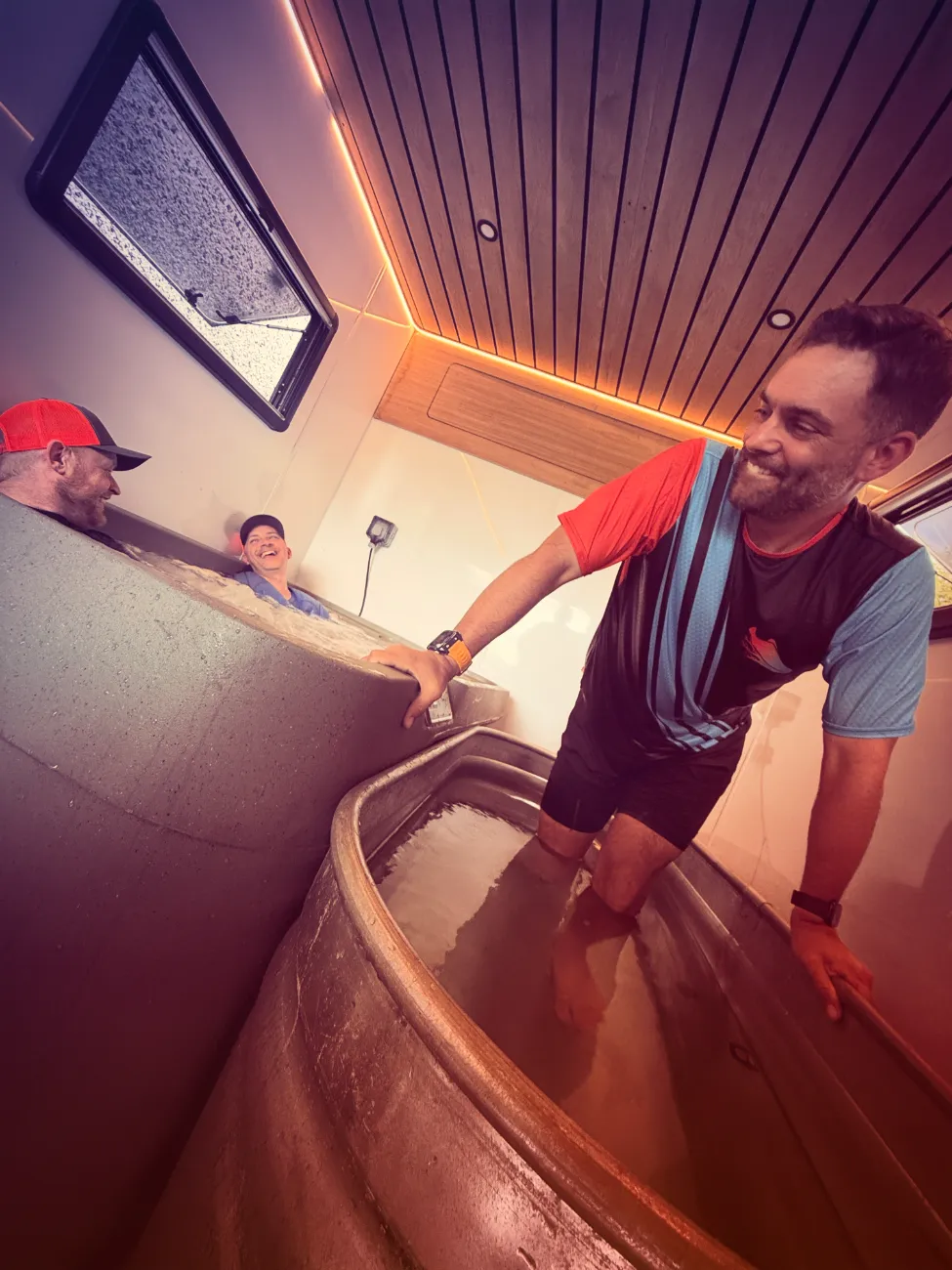
Not because I couldn’t handle it. I had simply absorbed all the available benefits much faster than everyone else.
That was my explanation, anyway.
For the next few minutes, nobody thought about sore legs, record documents or the mileage waiting for us the following morning.
We simply laughed. I stood beside the bath, already completely “recovered,” while Matt and Andrew continued their entirely optional suffering.
Looking back, I couldn’t honestly tell you what seventeen seconds in an ice bath did for my legs.
What I remember is what the whole evening did for our morale.
Austin had driven hours to reach us, arrived early, prepared everything and stayed with us while we recovered. Afterwards, he still had to pack it all away and make the long journey home.
That generosity meant more than any piece of equipment.
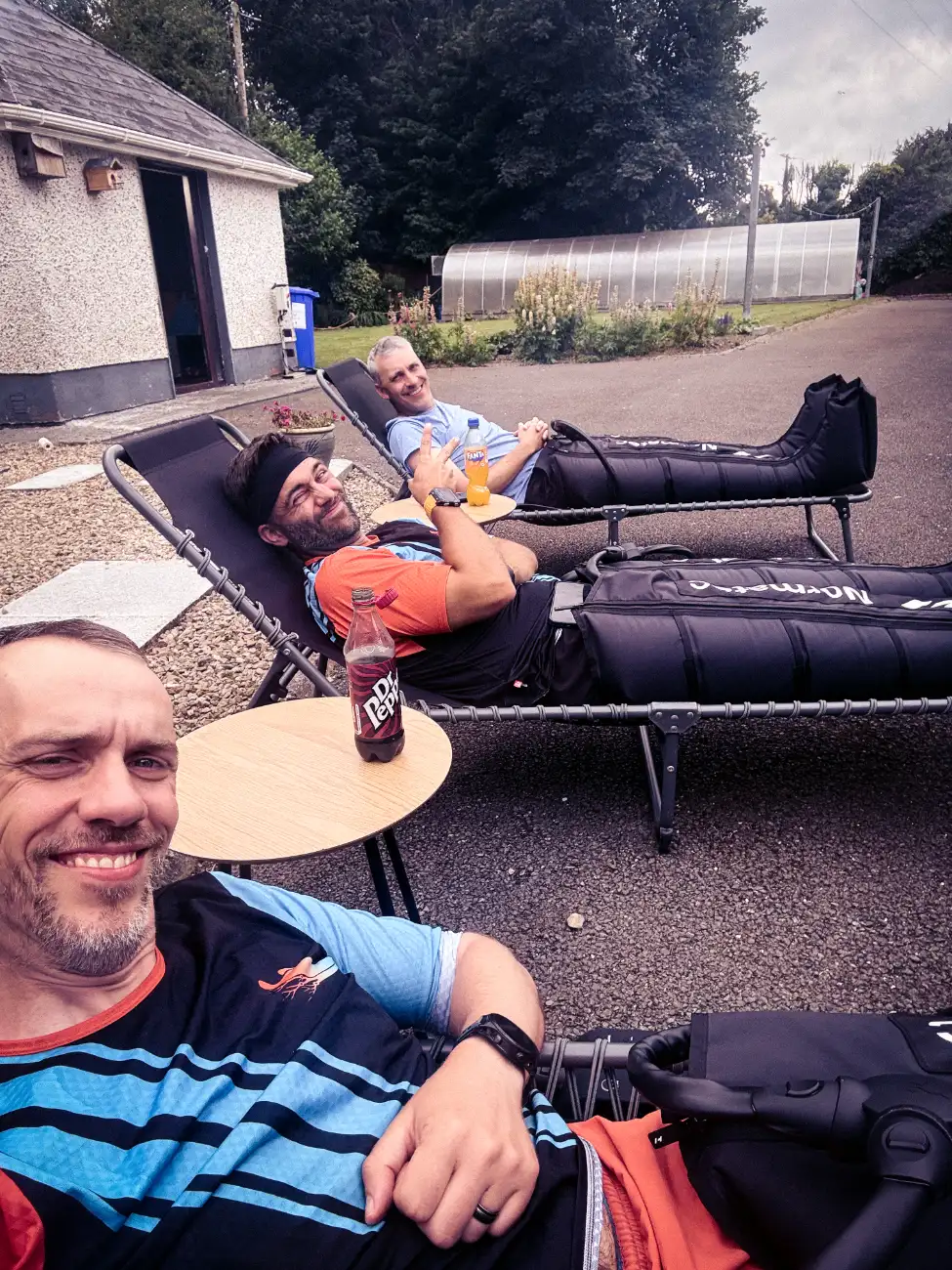
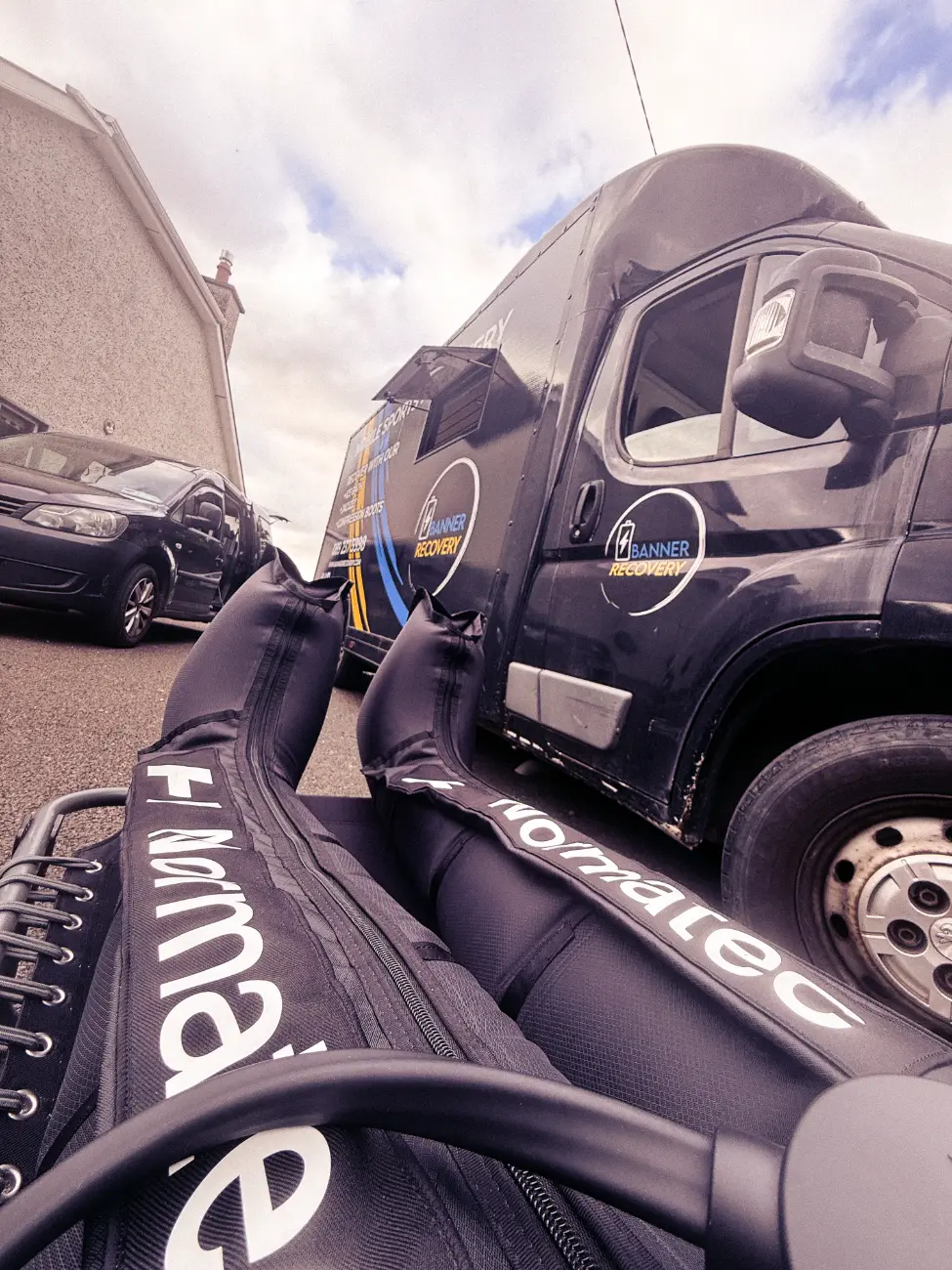
For a little while, we used the jacuzzi, watched the football and talked rubbish. The running disappeared into the background. We weren’t three men trying to cover the length of Ireland. We were simply friends laughing at the end of another long day.
The ice may not have fixed our bodies. But the evening lifted our heads.
Mizen to Malin, behind the story
- Part 1: The Build-Up A year of spreadsheets, sponsors and slowly losing the run of ourselves.
- Part 2: Day One Mizen Head to Gougane Barra. Twenty-one miles and one very big question.
- Part 3: Life on the Road Rhythm, routes, a dead Garmin, a silent supper and seventeen seconds of ice.
- Part 4: It Gets Stranger Uncle Sam, the wrong anthem, the longest day, a castle at halfway and a heatwave.
- Part 5: The Big Guns Cow cream, chalk messages, ice lollies from a stranger and the day our families found us.
- Part 6: Malin Head No crew, half a bakery, two finish lines and the last mile and a half of Ireland.
Coming in Part 4
The journey gets even stranger in Part Four.
We celebrate the Fourth of July by bringing Uncle Sam to the middle of Ireland, somehow turn Lough Rynn Castle into our temporary home and discover what five-star food tastes like after days of pastries, Pot Noodles and roadside takeaways.
At the same time, the challenge begins to tighten its grip. Matt’s injury is growing, Deep Heat is being applied by the bucketful, and the Irish summer delivers blistering temperatures that absolutely nobody promised us.
The miles are still moving north.
So are the problems.
And somehow, so are we.